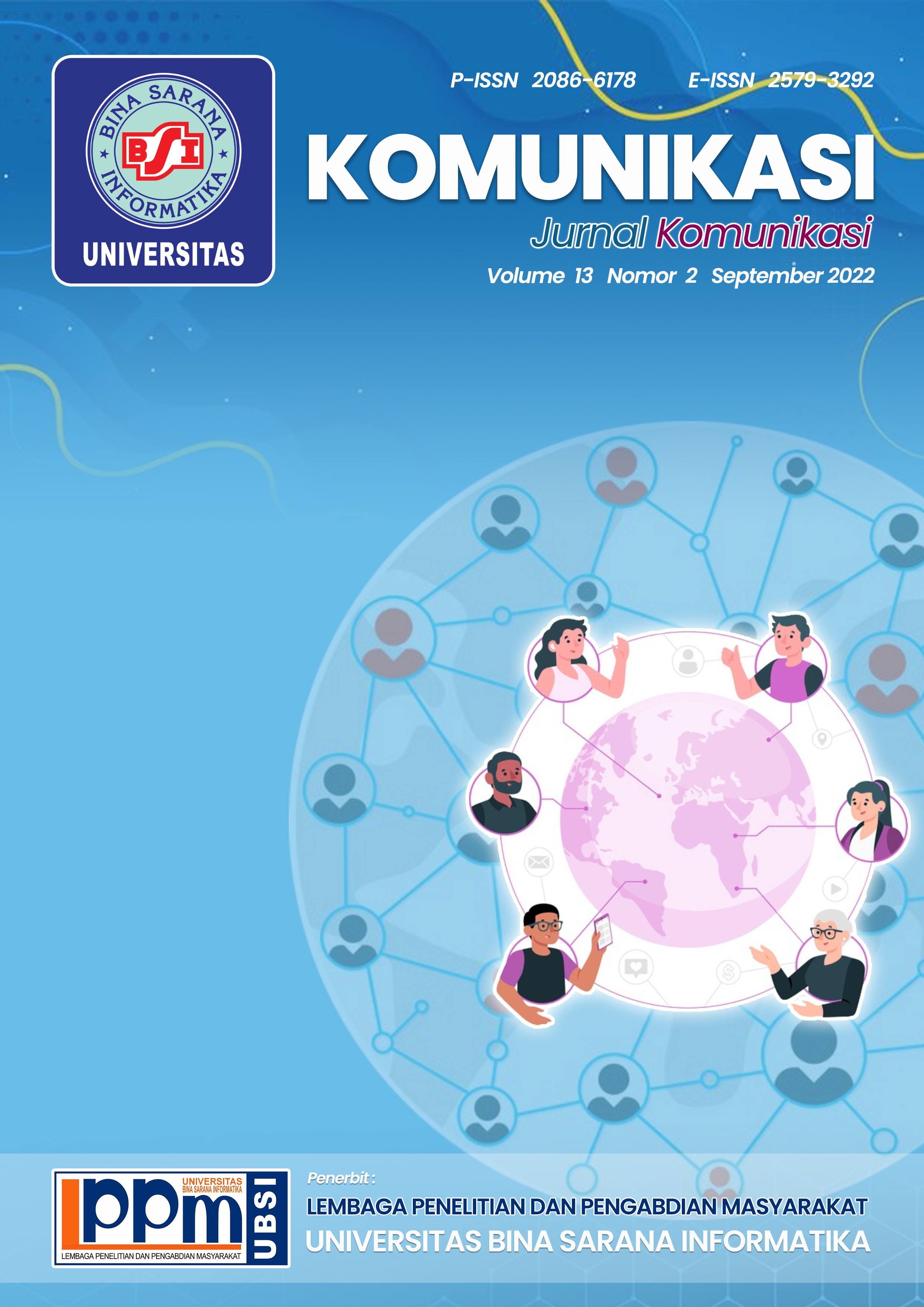
Symbolic Interaction of Communication on Social Drug Users’ Community in Jakarta
DOI:
https://doi.org/10.31294/jkom.v13i2.11799Keywords:
Symbolic interaction, Communication of meaning, Social Community, Drug UserAbstract
This article considers how communication is very capable and changeable in nation’s culture. Breathtakingly, this phenomenon was afflicted in metropolitan community in Jakarta as a result of globalization which is spread to all civilizations of nations in the world. The differences in perception of each individual equally obtain stimulate can occur in their interaction, the freedom of individual is to interpret the existing situation makes this research is needed due to the subject is interaction’s people based on perspective of symbolic interaction. The result have shown the drug users in Jakarta created a new communication symbols to disguise the terms of drugs in their social environment into the domain of the community. Moreover, youth groups with a very complex social life and inquisitive who wants to try a new thing and imitate easily in part of the foreign culture such as drugs is grow up rapidly. The research used symbolic interaction analysis and the researcher revealed the symbols and the meanings of communication based on the theory of symbolic interactionism; objectivity, and internalization where user makes specialties in their interactions between drug users in Jakarta
References
Alexander, D. C., Faules, D. F., & Jabusch, D. M. (1974). The effects of basic speech course training on ability to role‐play an employment interview. Central States Speech Journal. https://doi.org/10.1080/105109774 09367810
Becker, H. S. (1953). Becoming a Marihuana User. American Journal of Sociology. https://doi.org/10.1086/221326
Becker, H. S., & Geer, B. (1957). Field methods and techniques participant observation and interviewing : a comparison. Human Organization.
BNN. (2017). Survei Nasional Penyalahgunaan Narkoba di 34 Provinsi Tahun 2017. Jurnal Data Puslitdatin 2017.
Cooley, C. H. (2019). THE SOCIAL SELF—1. THE MEANING OF “I.” In Human Nature and the Social Order. https://doi.org/10.4324/978020378 9513-5
Daniels, A. K., Manis, J. G., & Meltzer, B. N. (1968). Symbolic Interaction: A Reader in Social Psychology. American Sociological Review. https://doi.org/10.2307/2092290
Devito, J. A. (2011). Komunikasi Antarmanusia. Komunikasi Antarmanusia. Kuliah Dasar.
Gillespie, A. (2005). G.H. Mead: Theorist of the social act. Journal for the Theory of Social Behaviour. https://doi.org/10.1111/j.0021- 8308.2005.00262.x
Goffman, E. (1983). THE INTERACTION ORDER. American Sociological Review.
Haris, A., & Amalia, A. (2018). MAKNA DAN SIMBOL DALAM PROSES INTERAKSI SOSIAL (Sebuah Tinjauan Komunikasi). Jurnal Dakwah Risalah. https://doi.org/10.24014/jdr.v29i1. 5777
Helmi Supriyatno. (2019). Lunturnya Budaya Tradisional di Era Digital | Harian Bhirawa Online. Https://Www.Harianbhirawa.Co.Id
Holman, R. H., & Fisher, B. A. (1979). Perspectives on Human Communication. Journal of Marketing Research. https://doi.org/10.2307/3150721
Budianto, Irmayanti M, 2002, Dialektika, Wedatama Widya Sastra, Jakarta
Lal, B. B. (1995). Symbolic Interaction Theories. American Behavioral Scientist. https://doi.org/10.1177/000276429 5038003005
Lawson, M. A. (2016). The healing nature of communion: Scottish psychoanalysis, R.D. Laing, and therapeutic communities. Journal of Theoretical and Philosophical Psychology. https://doi.org/10.1037/teo0000032
Light, D. W., Berger, P. L., & Luckmann, T. (1967). The Social Construction of Reality: A Treatise in the Sociology of Knowledge. Sociological Analysis. https://doi.org/10.2307/3710424
Mead, G.H., 1972, Mind, Self, and Society, The University of Chicago Press, Chicago
Mulyana, D. (2001). Metodologi Penelitian Kualitatif: Paradigma Baru Ilmu Komunikasi dan Ilmu Sosial Lainnya. In Bandung: PT remaja Rosdakarya.
Natanson, M., & Natanson, M. (1962). A Study in Philosophy and the Social Sciences. In Literature, Philosophy, and the Social Sciences. https://doi.org/10.1007/978-94- 011-9278-1_13
Sobur, A. (2002). Bercengkerama dengan Semiotika. Mediator: Jurnal Komunikasi.
Suneki, & Haryono. (2012). Paradigma Teori Dramaturgi Terhadap Kehidupan Sosial. Civis.
United Nations Office on Drugs and Crime (UNODC) (Hrsg.). (2014). The Illicit Trafficking of Counterfeit Goods and Transnational Organized Crime. United Nations Office on Drugs and Crime.
Weber, M. (2018). “Objectivity” in Social Science and Social Policy. In Methodology of Social Sciences. https://doi.org/10.4324/978131512 4445-2
Wheen, F., Ward, G., University of Illinois Library, Thoreau, H. D., Thompson, M., Spoon Collective, … Abrams, M. H. (2010). A Bibliography of Literary Theory, Criticism and Philology. In The Johns Hopkins University Press.
Downloads
Published
Issue
Section
License
Copyright (c) 2022 Edison Hutapea; Yuli Marlina; Fery Sanjaya

This work is licensed under a Creative Commons Attribution-ShareAlike 4.0 International License.